DIANA DEAK — BEHIND THE CURTAIN

CURTAIN™
TO THE FINISHED BOOK.
You don't always see everything that happened before it.
Step behind the curtain and discover how a book is made.
Before there is a book, there is an idea.
A story can begin with something very small: a question, an image, a feeling, a memory, a sentence — or a thought that refuses to disappear.
From one idea, new possibilities begin to branch. Characters appear. Questions appear. Scenes, conflicts and worlds begin to take shape.
Where an idea begins to take shape.
The first sketch does not need to look like a book. It can be rough, incomplete and full of possibilities.
It gives the original idea somewhere to go. From that first visual or written outline, new directions can emerge.
The idea becomes chapters.
Ideas begin connecting. Characters become people. Questions become scenes. Research becomes context.
Digital tools and AI-assisted development can be part of the creative process, helping ideas expand and new possibilities emerge.
But the manuscript still has to become a coherent story. The author remains responsible for the creative and editorial decisions.
Before publication, the author becomes the reader.
The manuscript is read again as a complete work. Chapters are reconsidered. Details are checked. Transitions are examined. The story is viewed from the reader's perspective.
Does the chapter belong? Does the sequence work? Is the voice consistent? Does the story communicate what it needs to communicate?
The manuscript becomes a reading experience.
Words need a place to live. Pages are arranged carefully so the manuscript begins to feel like a finished book.
Title, subtitle, chapters, spacing, typography, page structure and visual rhythm all become part of the final reading experience.
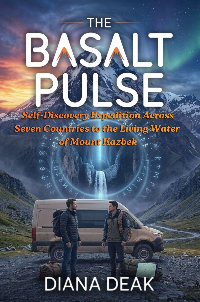
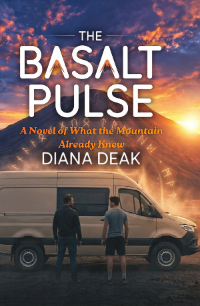
Before the reader opens the book, they see the cover.
Once the final page count and interior are known, the visual identity of the book can be developed.
Ebook, paperback and hardcover formats each require their own preparation.
Covers are created and arranged in Canva, with the goal of creating a visual identity that belongs to the story.
One story can become several reading experiences.
A finished book may exist as Kindle, paperback and hardcover. Each format has its own technical requirements and needs to be checked separately.
Before publication, everything is checked.
Kindle files, interior pages, cover files, images and supporting documents are reviewed before publication.
The purpose is simple: catch problems before the reader does.
Publication is more than uploading a file.
The book needs its description, keywords, categories, formats, cover and publishing information.
Once the files and information are ready, the book can become available on Amazon.
A book can be prepared before it is promoted.
After publication, time can be used to prepare the story around the story.
Visuals, social posts, reels, articles, blog content and reader pathways can all be prepared before the main promotional push.
One book. Many doors.
Instagram, Facebook, Threads, X, Pinterest, LinkedIn, Medium, Blogger, the author's website and short-form video can all become different entrances into the same story.
The goal is not simply to announce: "My book is available."
The goal is to help readers understand what the book is, what they may experience and why the story might matter to them.
Don't make the reader work to understand the book.
A book may be completely clear to its author. It is not always immediately clear to someone discovering it for the first time.
Behind every book is a human journey.
There are ideas that almost disappear. Manuscripts that change direction. Revisions. Doubts. New beginnings.
And there is the decision to keep writing.
Some stories are finished. Others are beginning.
Some ideas exist as complete manuscripts. Some are being developed. Some are still only sketches.
Sometimes the smallest question becomes the next book.
BEHIND THE CURTAIN.
Now you know that a finished book is more than a cover,
a manuscript or an Amazon page.
It is a journey from an idea to something a reader
can finally open, experience and hold.


Comments
Post a Comment